SPOT 5

Wakasa Town

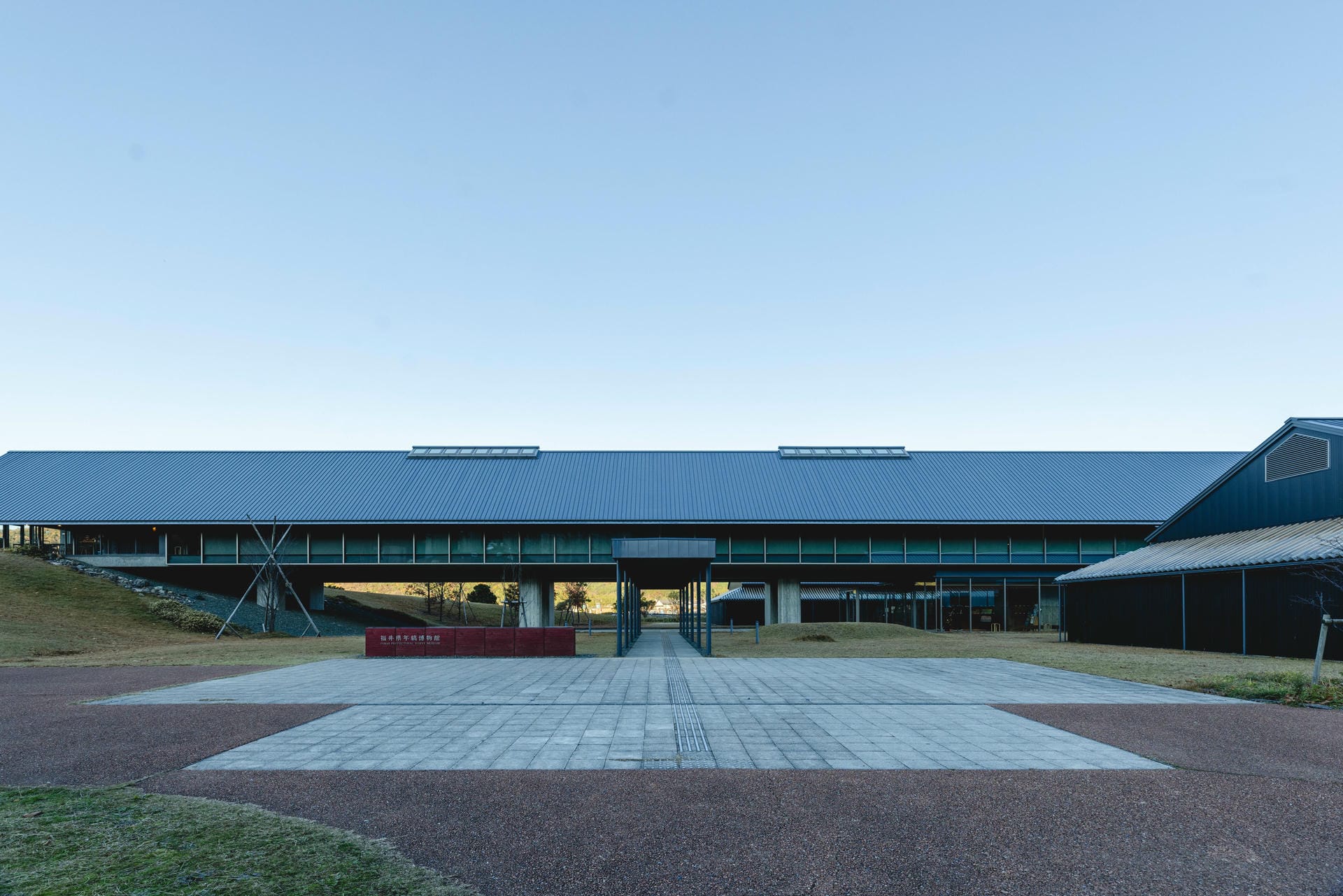
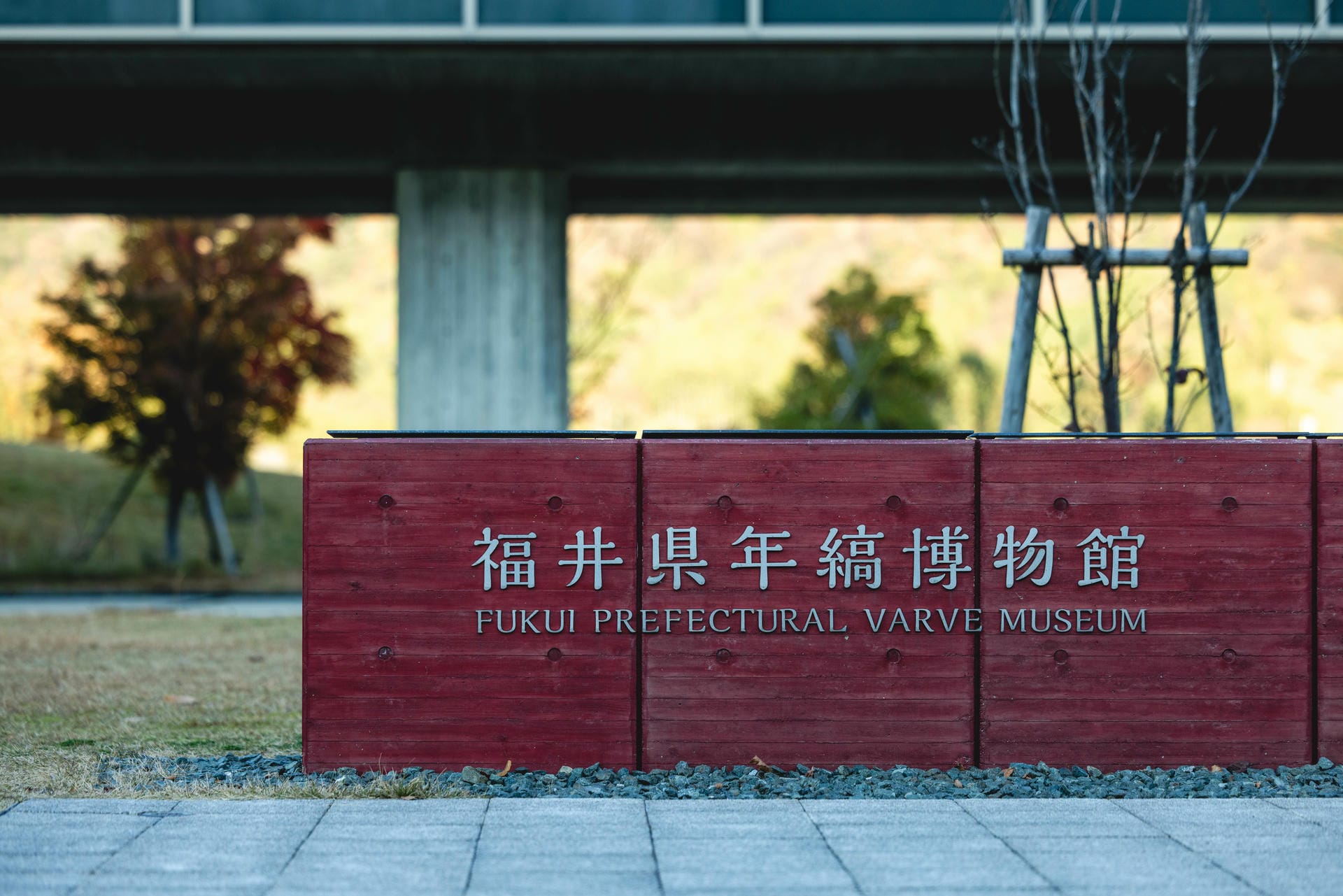
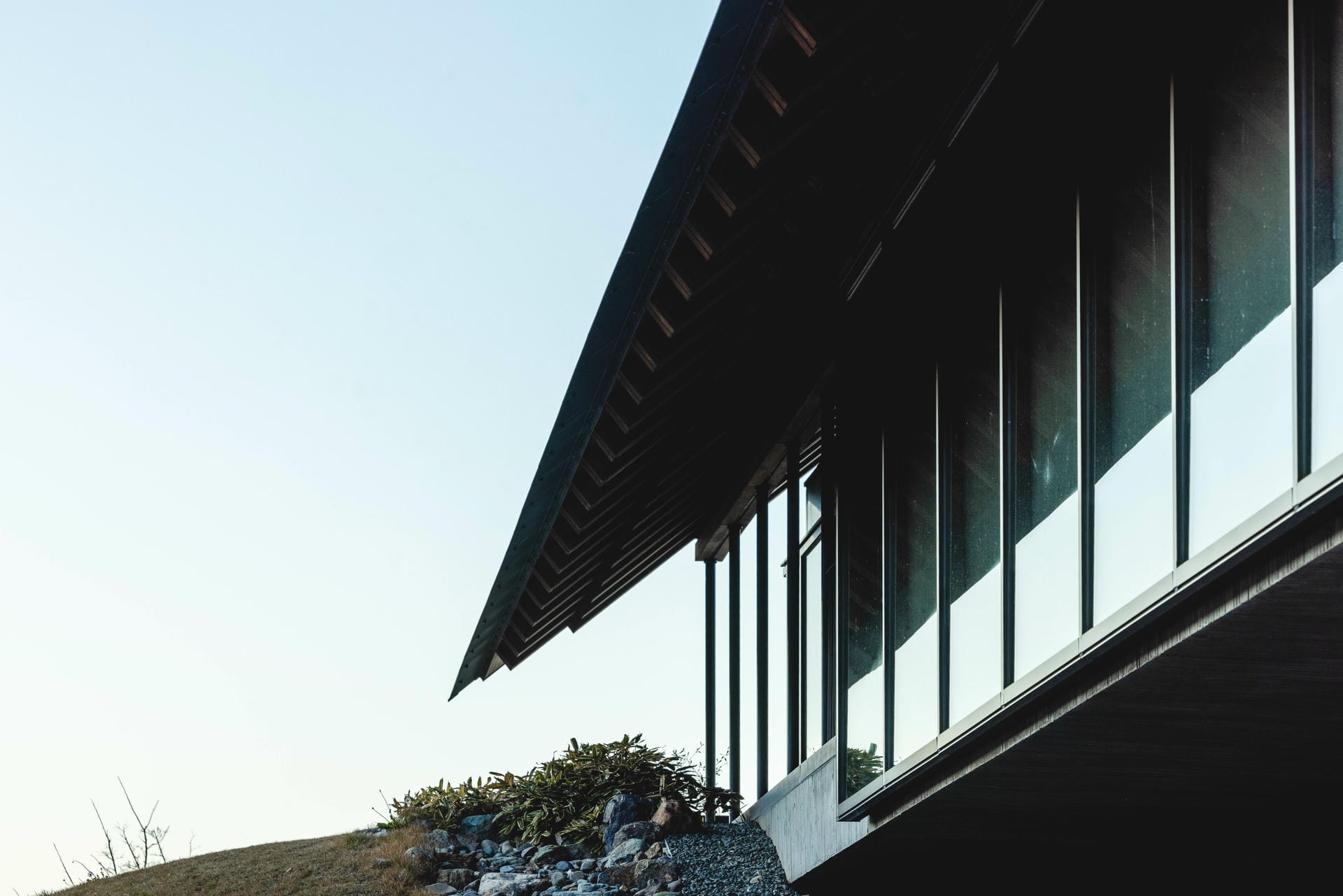
Fukui Prefectural Varve Museum

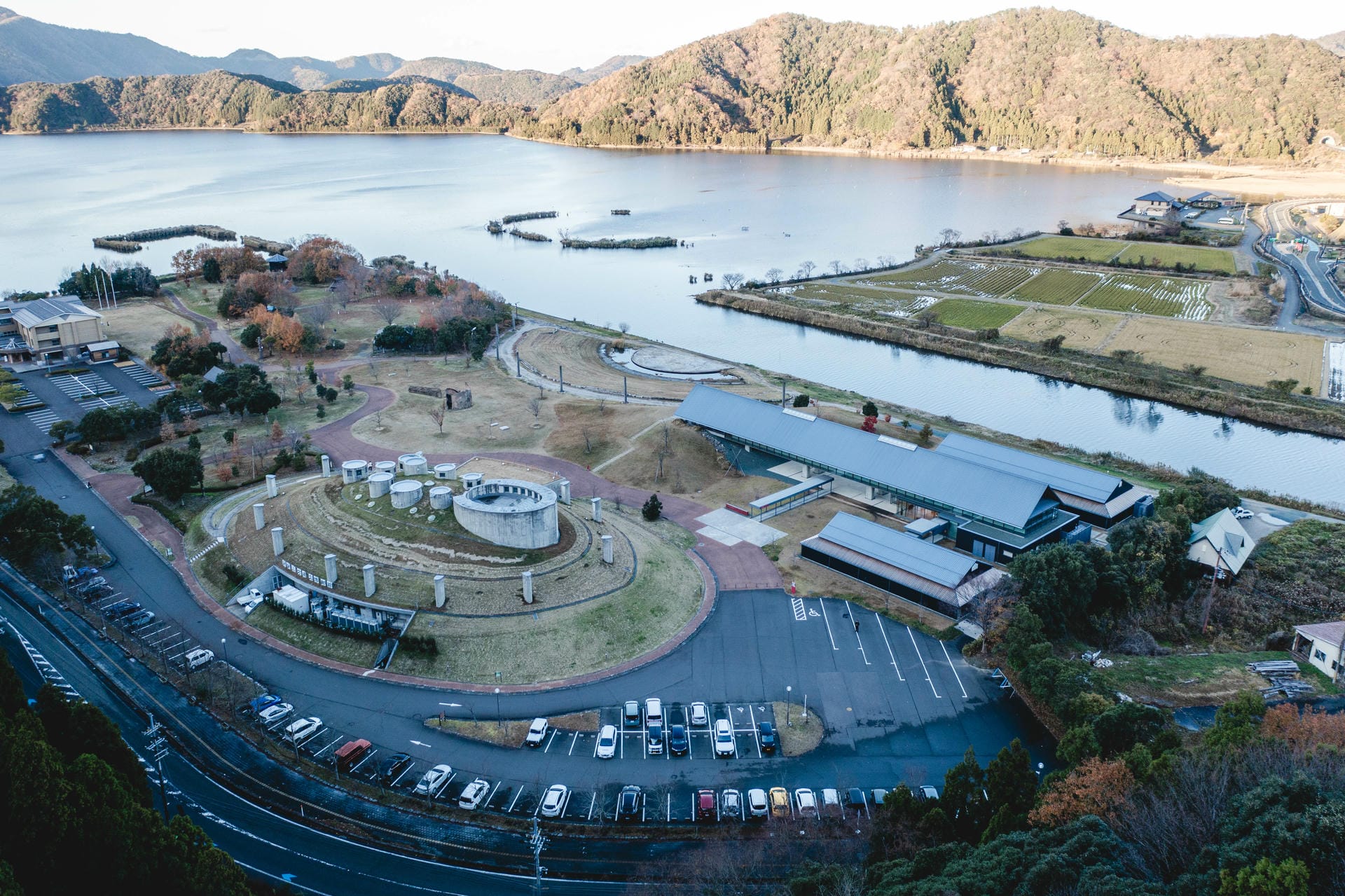
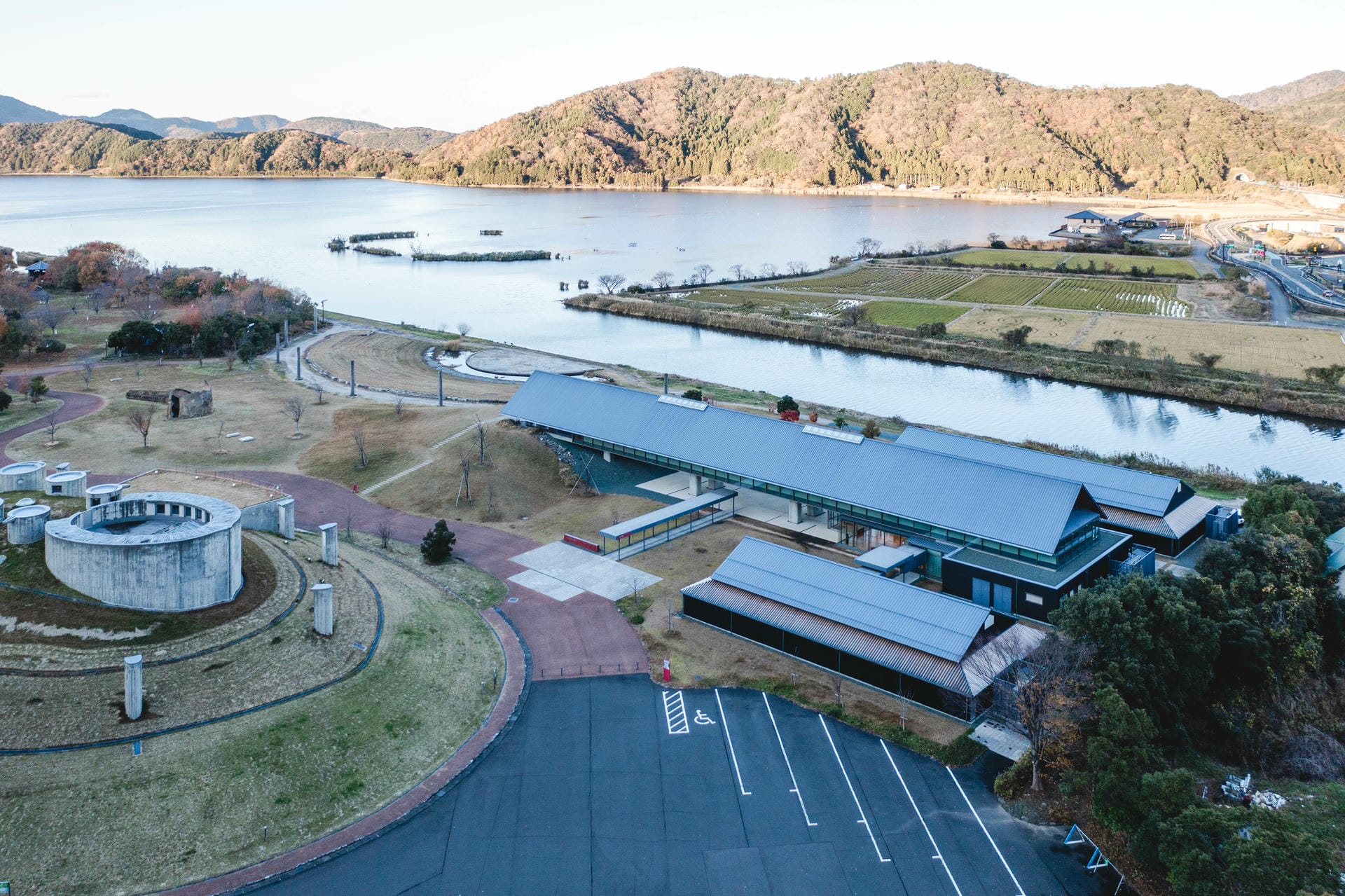
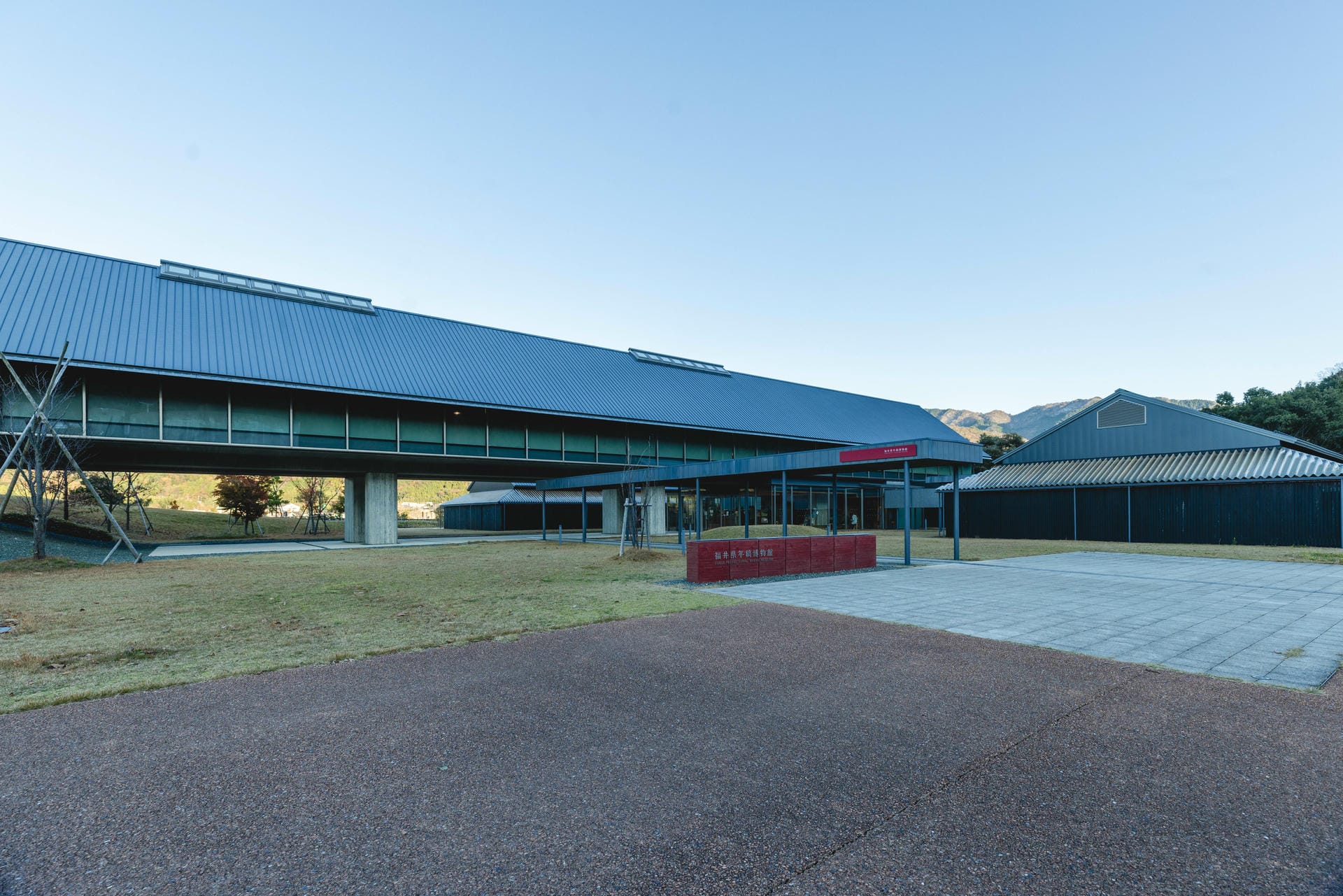
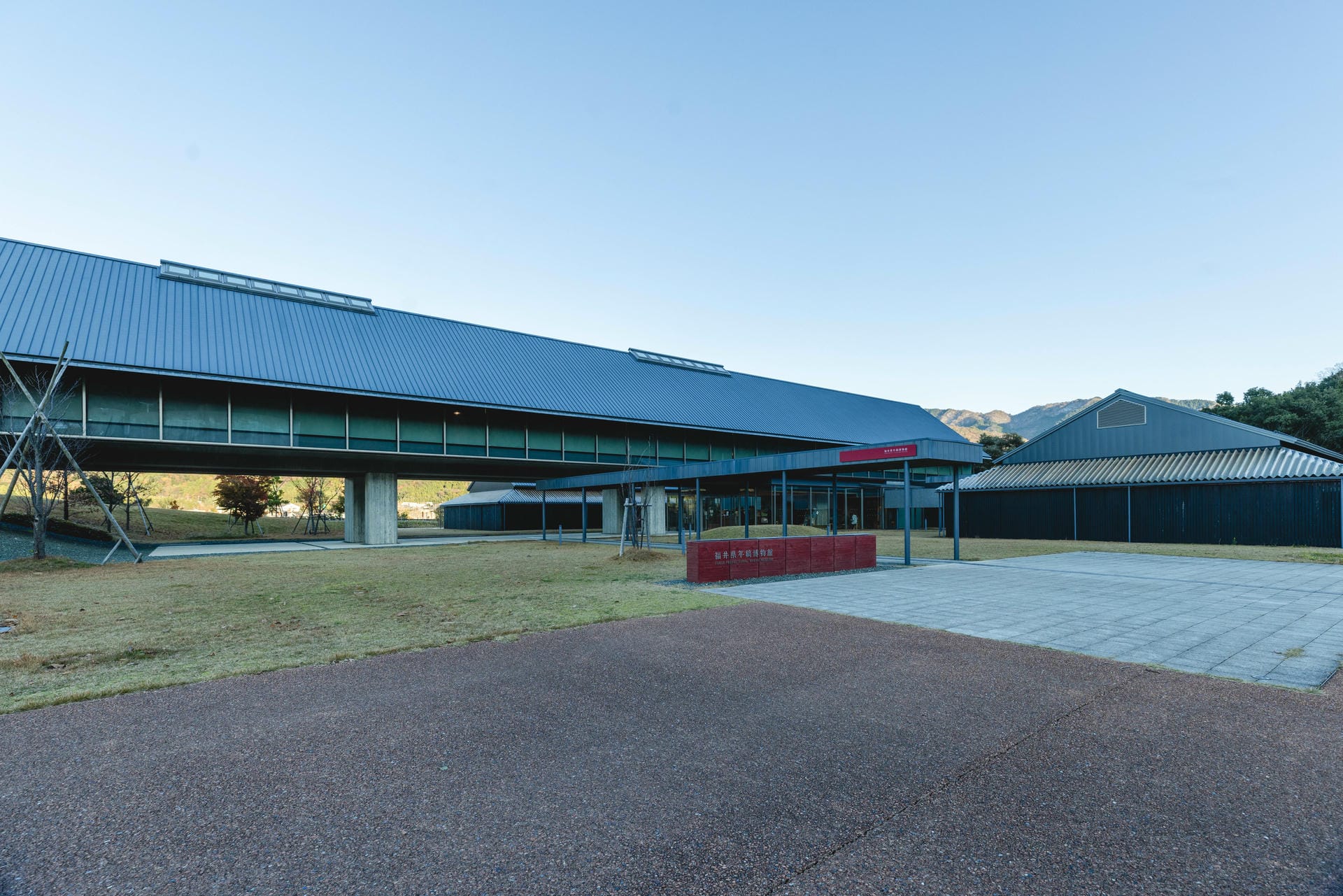
This is a rare museum in the world that exhibits approximately 70,000 years of "varves" (striped geological layers) deposited at the bottom of Lake Suigetsu, one of the Mikatagoko (Five Lakes of Mikata). It is located within "Jomon Roman Park," which also features the Wakasa Mikata Jomon Museum, the outdoor stage Jomon Colosseum, and Jomon Hiroba (Square) where pit dwellings are reproduced.

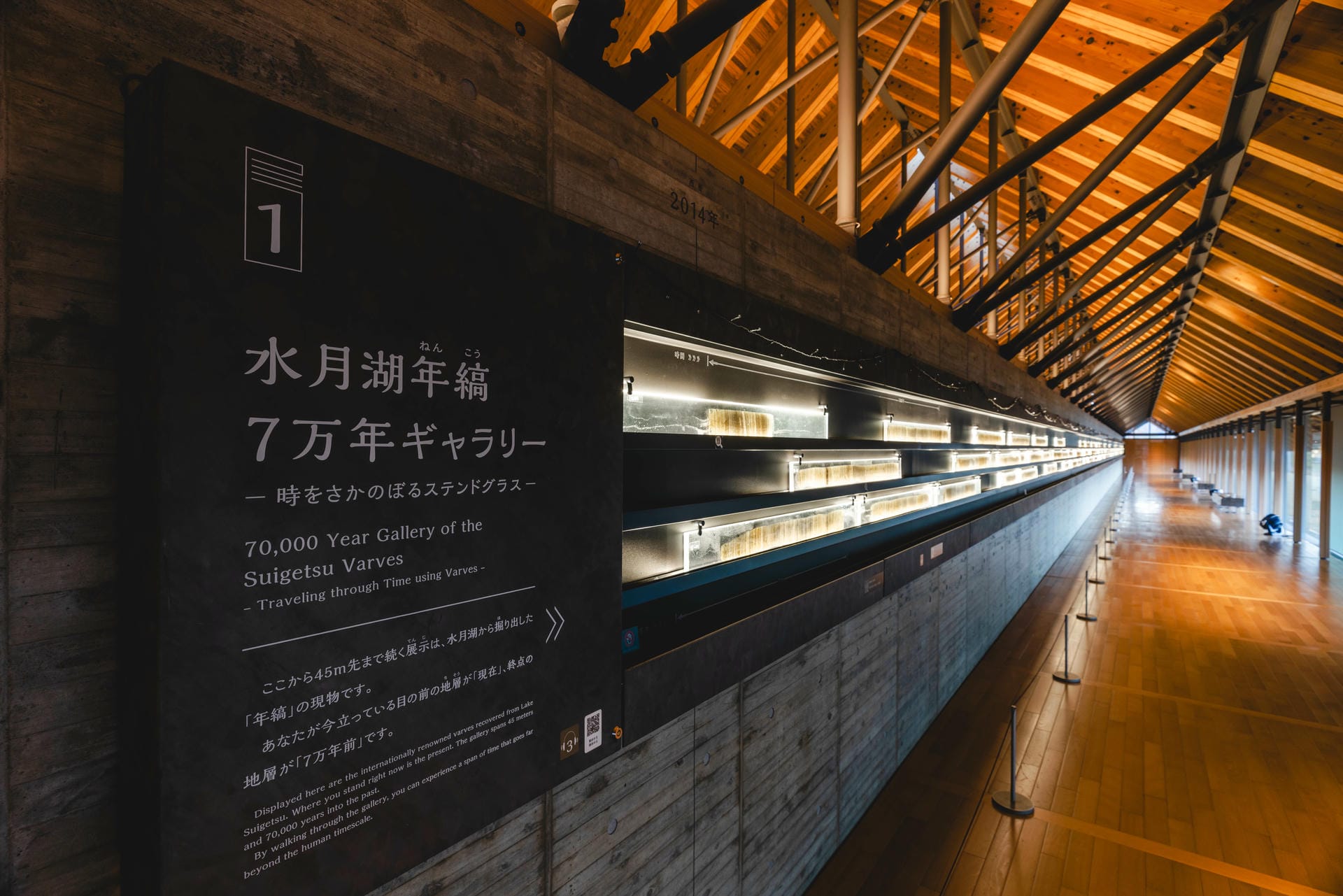
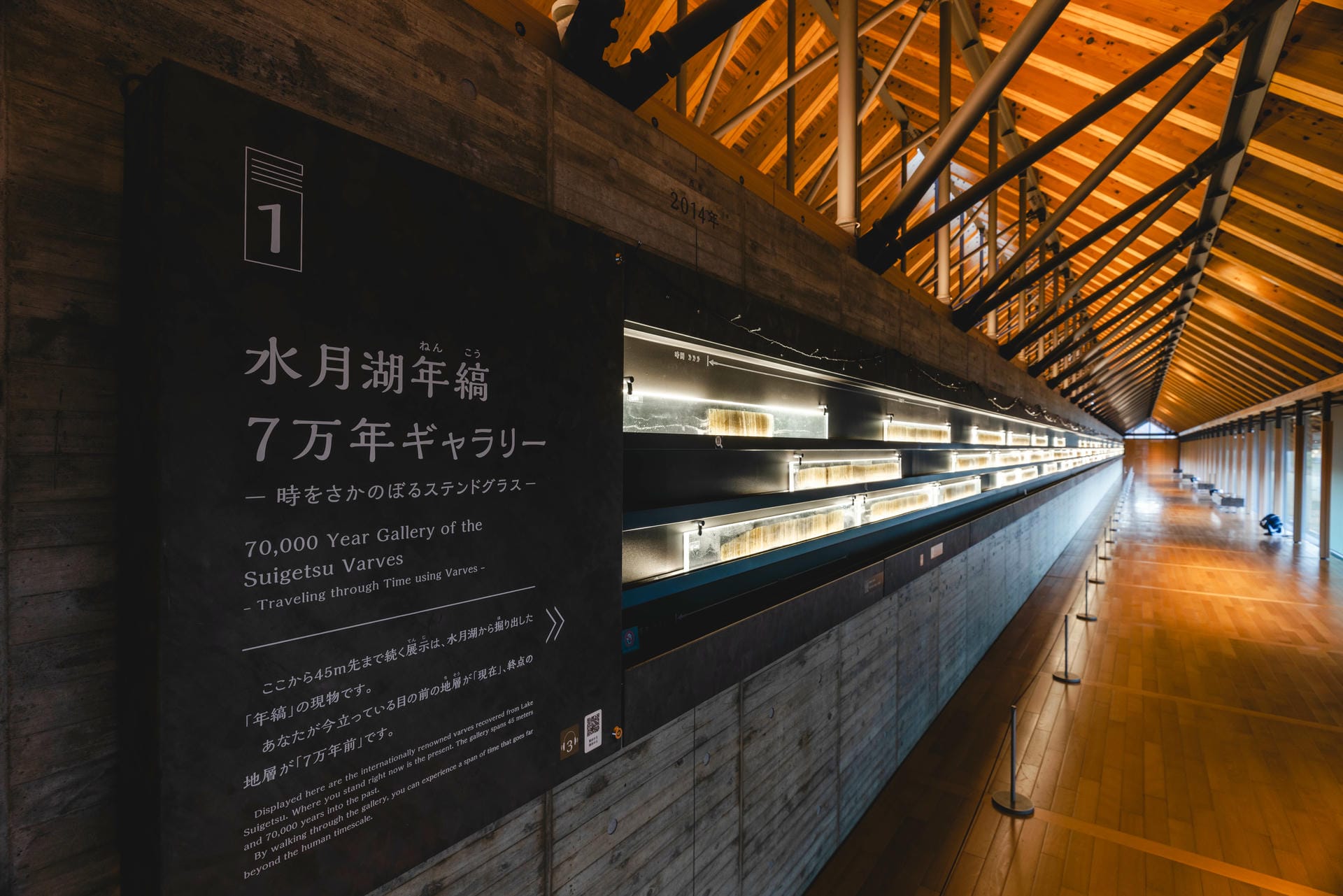
This is the world's first museum themed on "varves," which are striped geological layers. 45 meters of actual varves covering 70,000 years, discovered at the bottom of Lake Suigetsu, are displayed as beautiful stained glass.

Lake Suigetsu is a "Miracle Lake" Where the Lakebed is Undisturbed

Mikatagoko (Five Lakes of Mikata) are representative scenic spots of the Wakasa region, known as the "Lakes of Five Colors" appearing in different shades of blue due to differences in water quality and depth. Lake Suigetsu, one of them, is deep with a maximum depth of 34m. Plankton remains and diatoms deposit on the lakebed from spring to autumn, and yellow sand and iron deposit from late autumn to winter, forming one layer per year (with an average thickness of about 0.7mm).
Lake Suigetsu has no rivers flowing into it, and because it is deep and the bottom lacks oxygen, no organisms live there, so the sediment on the lakebed was not disturbed. Furthermore, because the lake was not filled in due to fault activity, it was a lake with a miraculous environment set for the formation of varves.

Varves are layers formed one per year that piled up on the lakebed; in Lake Suigetsu, there are actually 45m of varves covering approximately 70,000 years. Since data such as past temperatures, precipitation, climate changes, changes in surrounding vegetation, floods, and earthquakes can be grasped on a yearly basis, it has become possible to analyze in more detail and further back into the past.
70,000 Years of Varves Turned into Stained Glass

In the world of geology, tree rings were previously used as a ruler to investigate the age of fossils and strata. By measuring the amount of radiocarbon and comparing it with tree rings, it was possible to identify ages up to about 14,700 years ago. Before that was the Ice Age, so there were no trees to serve as a ruler.

It was the varves of Lake Suigetsu that extended this ruler all at once. It became possible to accurately measure the age of fossils up to 70,000 years ago, and at the 2012 UNESCO World Radiocarbon Conference General Assembly, the data obtained from the varves of Lake Suigetsu became the de facto world standard for geological dating.

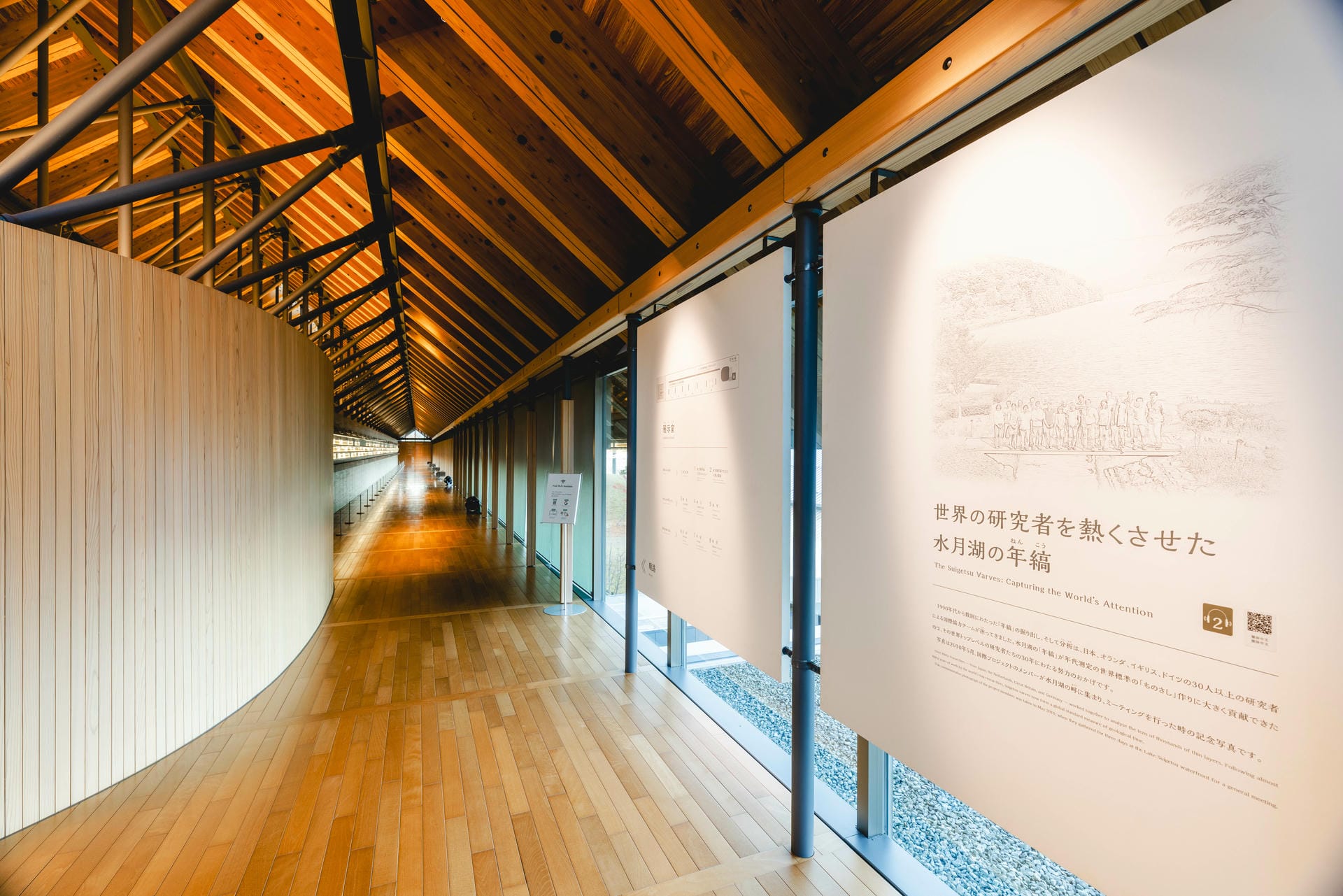
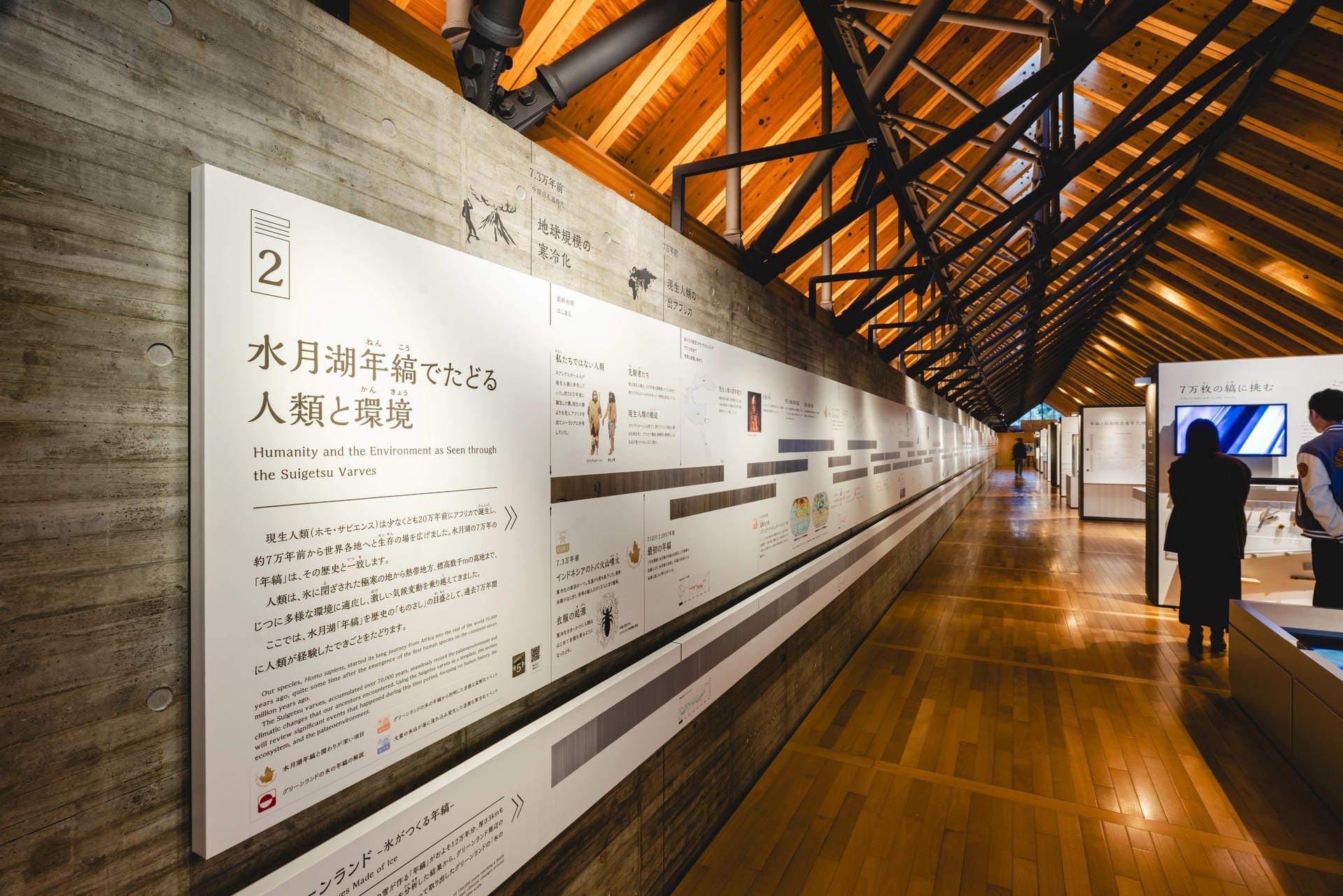
Inside the museum, there are diverse exhibitions as permanent displays, such as the "Varve Theater" where you can learn what varves are, and a gallery where 45m of actual varves covering 70,000 years are made into stained glass. A goods shop and cafe are also attached.

SPOT INFORMATION

Facility Name
Fukui Prefectural Varve Museum
Address
919-1331
122-12-1 Torihama, Wakasa-cho, Mikatakaminaka-gun, Fukui Prefecture Inside Jomon Roman Park
Phone Number
0770-45-0456
Hours
9:00-17:00
(Last entry 16:30)
Closed
Tuesdays, Year-end and New Year holidays (Dec 29 - Jan 2)
Admission
General: 500 yen (Group: 400 yen) Elementary/Junior High/High School Students: 200 yen (Group: 160 yen) *Groups are 20 people or more
Parking
Available (Free) Standard cars: 70 spaces